Hand-Knotted vs Machine-Made Rugs: How to Tell the Difference
Turn the rug over, check the fringe, look at the pattern. Five simple checks that reveal whether a rug was knotted by hand.
By Kazimi Rugs1 min read
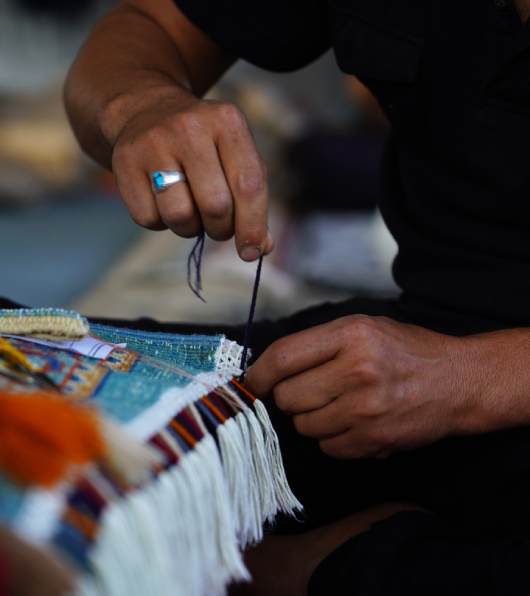
A genuine hand-knotted rug can take a weaver months to complete and will last for generations. Machine-made rugs can look similar in photos, so it helps to know what to look for.
1. Turn it over
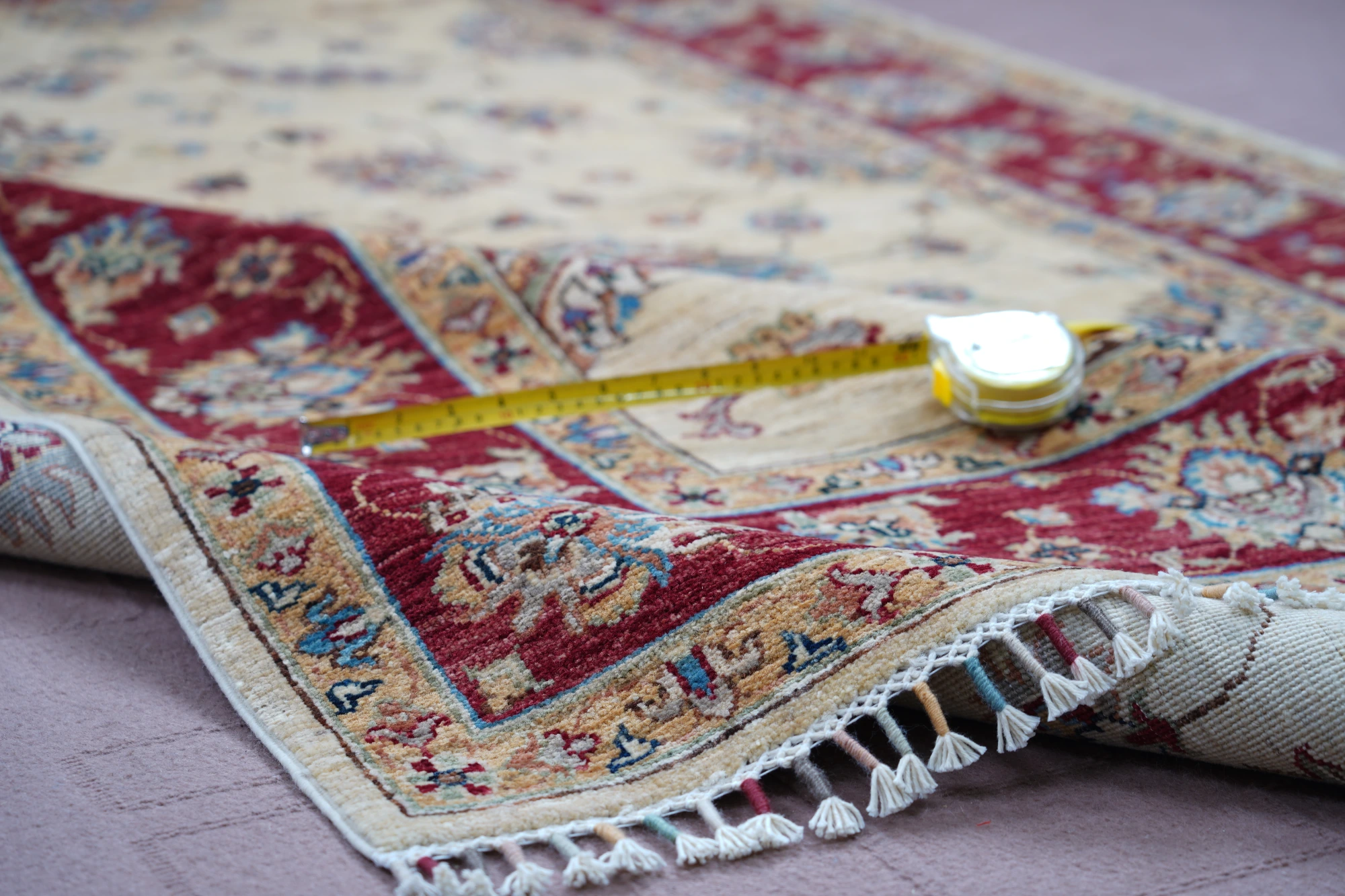
The back of a hand-knotted rug mirrors the front: you can clearly see the pattern, and the individual knots are slightly irregular. Machine-made rugs usually have a perfectly uniform grid, and many have a glued backing that hides the knots completely.
2. Check the fringe
On a hand-knotted rug the fringe is the end of the warp threads that run through the whole rug — it is part of the structure. On many machine-made rugs the fringe is sewn or glued on afterwards.
3. Look for small irregularities
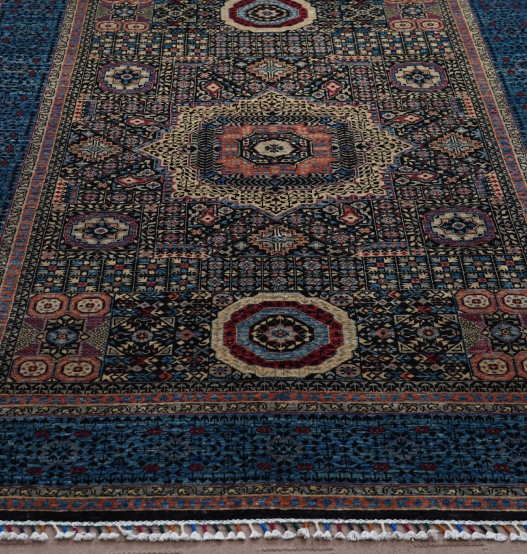
Slight variations in colour (called abrash) and tiny differences between one side of the pattern and the other are signs of a human hand and natural dyes, not flaws.
4. Feel the pile
Hand-spun wool has a lively, slightly uneven texture and a natural lanolin sheen. Synthetic fibres often feel uniform and plasticky.
5. Ask about the origin and the time it took
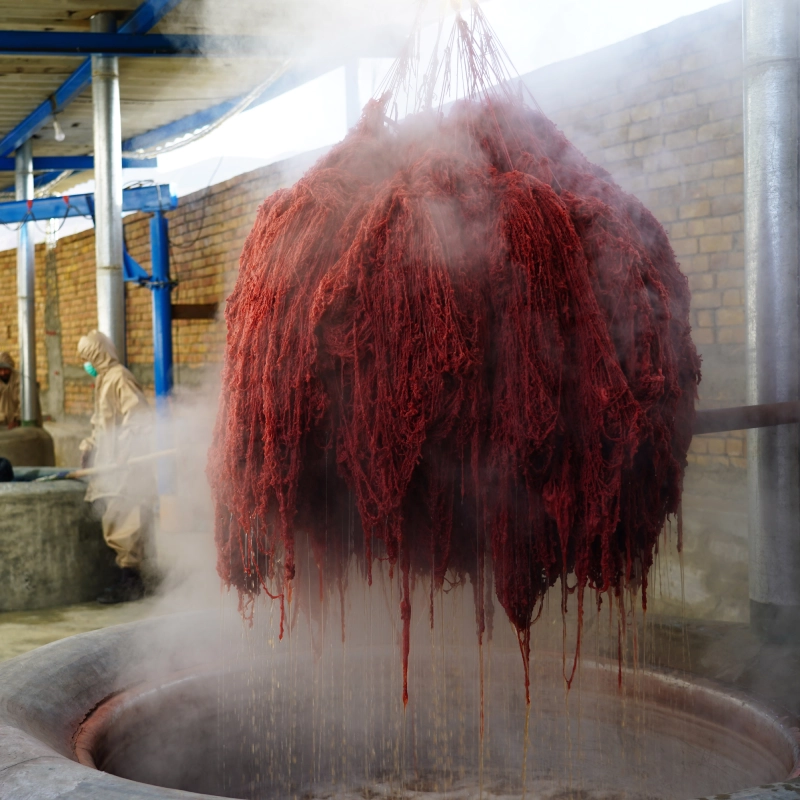
A maker of hand-knotted rugs will be able to tell you where the wool came from, how it was dyed and roughly how long the rug took to weave.
Why it matters
Hand-knotted rugs hold their value, can be washed and restored, and often become heirlooms. Machine-made rugs are cheaper but typically wear out within a few years. If a rug will sit at the centre of your home for decades, hand-knotted is worth it.